The 7-Step GTM Playbook
Why is GTM so important?
GTM, or go-to-market, is how Private Equity tends to talk about marketing. It carries more strategic weight than the word "marketing" does in a boardroom conversation. Marketing, if we're honest, is hard to discuss at a business level: it's subjective, creative, and difficult to tie directly to ROI.
When helping a portfolio company build toward organic growth, marketing has to become a foundational layer. It develops brand, fosters loyalty, and, most importantly, drives demand. When it's underfunded and overlooked, flat growth follows.
A GTM ultimately creates clarity around WHO you are selling to, WHY they care, and HOW you are going to reach them. Any mature business might seem to have this solved. In practice, these basics often live only in the heads of leadership and a few senior sales reps, producing a web of varying interpretations. Resellers and partners compound the problem, fragmenting the brand further. A GTM gets everything aligned and pointed in one direction.
How does a GTM Playbook get used?
A GTM Playbook is an actionable series of steps that helps teams build their go-to-market strategy and align all of their marketing and sales activities around it. It's a significant undertaking and no single document solves everything. But when it's built with intention, the people involved stay invested because momentum now has a platform to build from.
Try to avoid…
GTMs that open with goals like "Own the CyberSecurity Narrative" are setting themselves up for failure. Goals that ambitious without a plan behind them lose the audience and kill adoption.
A playbook means there's a coach and players. Players have assignments. You don't draw up a playbook and leave it to everyone to figure out independently.
A GTM Playbook will challenge Revenue and Marketing Ops. Data and insights are integral. If those foundations aren't in place yet, they'll need to get there. Prepare for that evolution.
1 Start with the buyer
You'll hear this called an ICP, Ideal Customer Profile. In B2B, we prefer Ideal Buyer Profile. Either way, this is an opportunity to invest collective thinking in selling to human beings, not companies.
These are the problems buyers are actively trying to solve. They may or may not connect directly to your products, but they create the avenues that open doors later.
At its simplest, this is the path a buyer takes from initial awareness through the decision to buy. It's a good exercise for broader team participation: "What have you seen in the field?" "Who else influences the decision?" "What else is happening in their world when they're evaluating this?" More perspectives produce more accurate maps.
Here’s a simple buyer’s journey

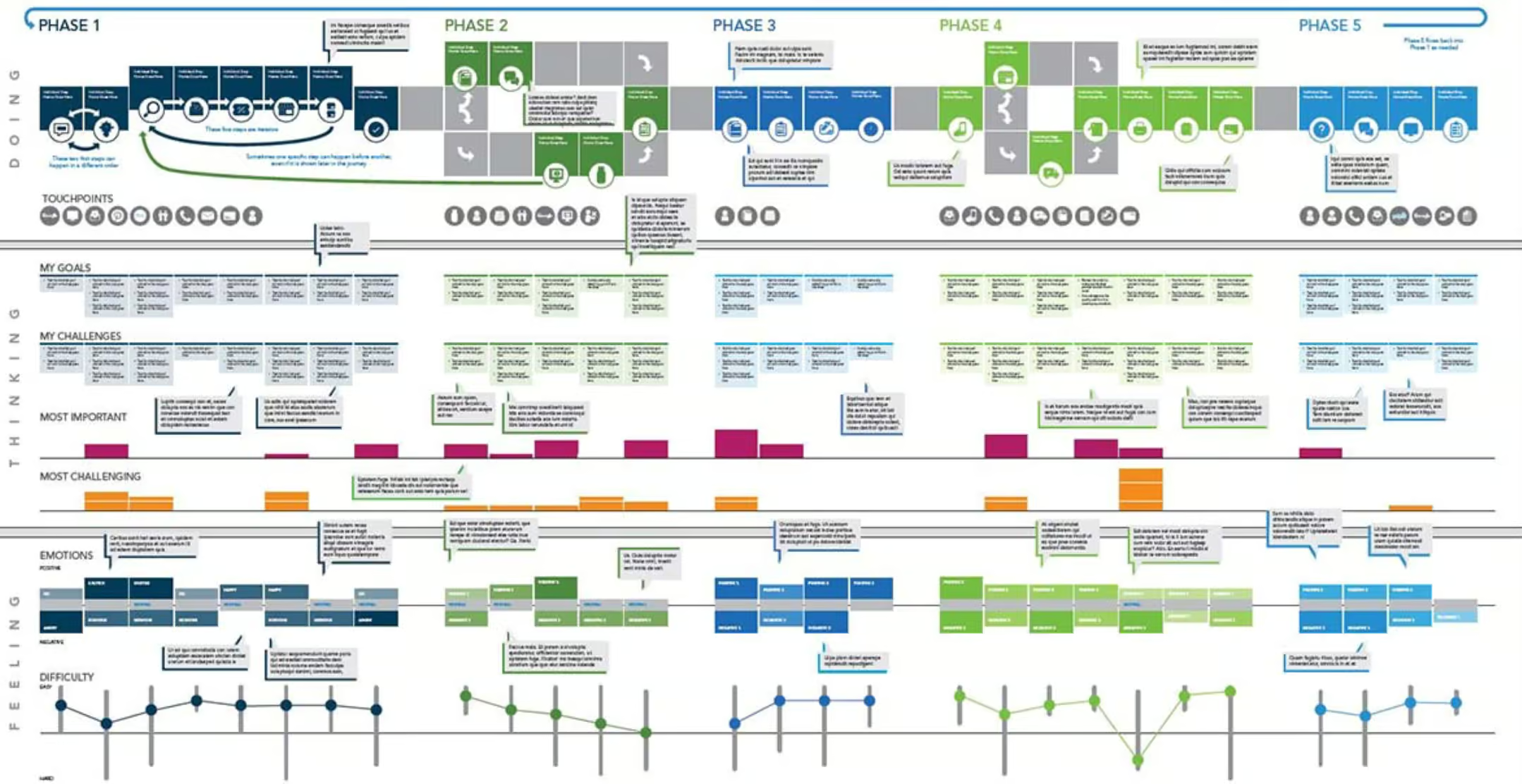
And here’s an overly complex example of a buyer’s journey. The game-board format is useful in some contexts, but this level of detail makes it difficult for leadership to adopt or act on.
2 Features & Benefits
When you hear "features," your mind probably goes to a consumer product: a phone, a vehicle, a piece of equipment. But every business has an equivalent: the things it offers, and what those things actually do for the people buying them.
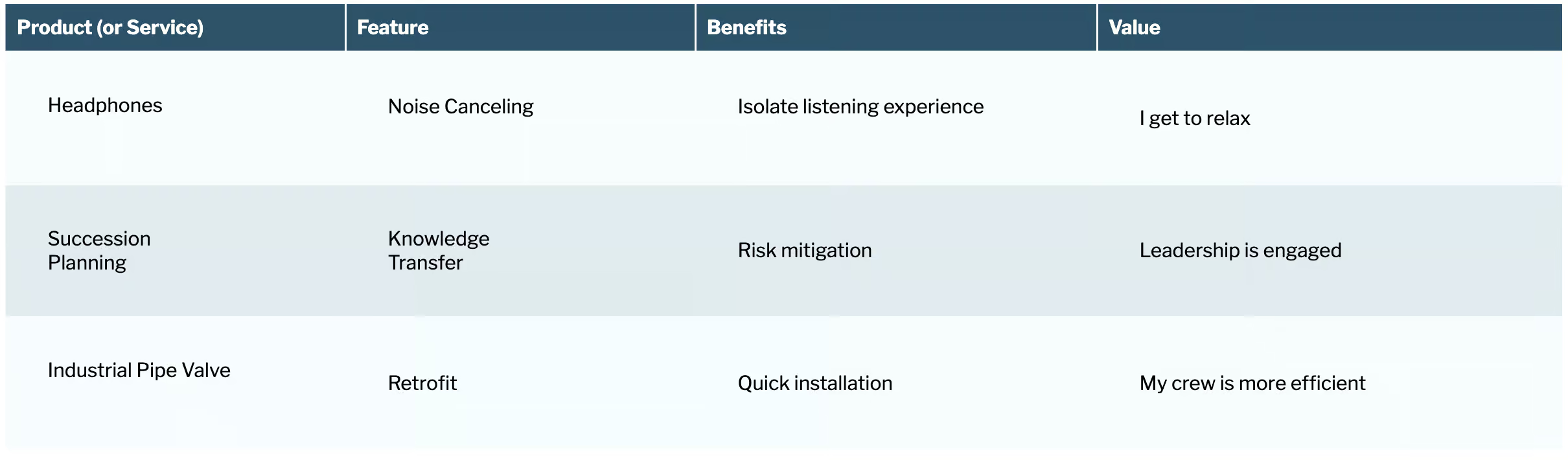
This exercise distills what your business sells down to its essentials: what you offer and, in the simplest possible terms, how that benefits buyers. The output gets mapped to buyer needs in the next step. This is not a full product catalog or an exhaustive list of reasons people buy from you. It's a focused, prioritized set.
This is an example of a simple feature/benefit map
3 Value Proposition
Value proposition answers one question: why does what you offer seem worth more than what a buyer is being asked to pay for it? Some people describe this as differentiation, but it goes deeper than a feature comparison.
Consider a MacBook Pro. The buyer isn't comparing RAM specs against a competing laptop. They're comparing it to other MacBooks. The decision is driven by the sense of quality, the cohesiveness of the OS, and the feeling that the product was built around how they work rather than the other way around. That's brand equity built on a strong value proposition: it justifies a premium long after a competitor releases a faster processor.
This works the same way in every category. You don't need a legendary product designer for it to apply to your business.
A few tips on designing your value proposition:
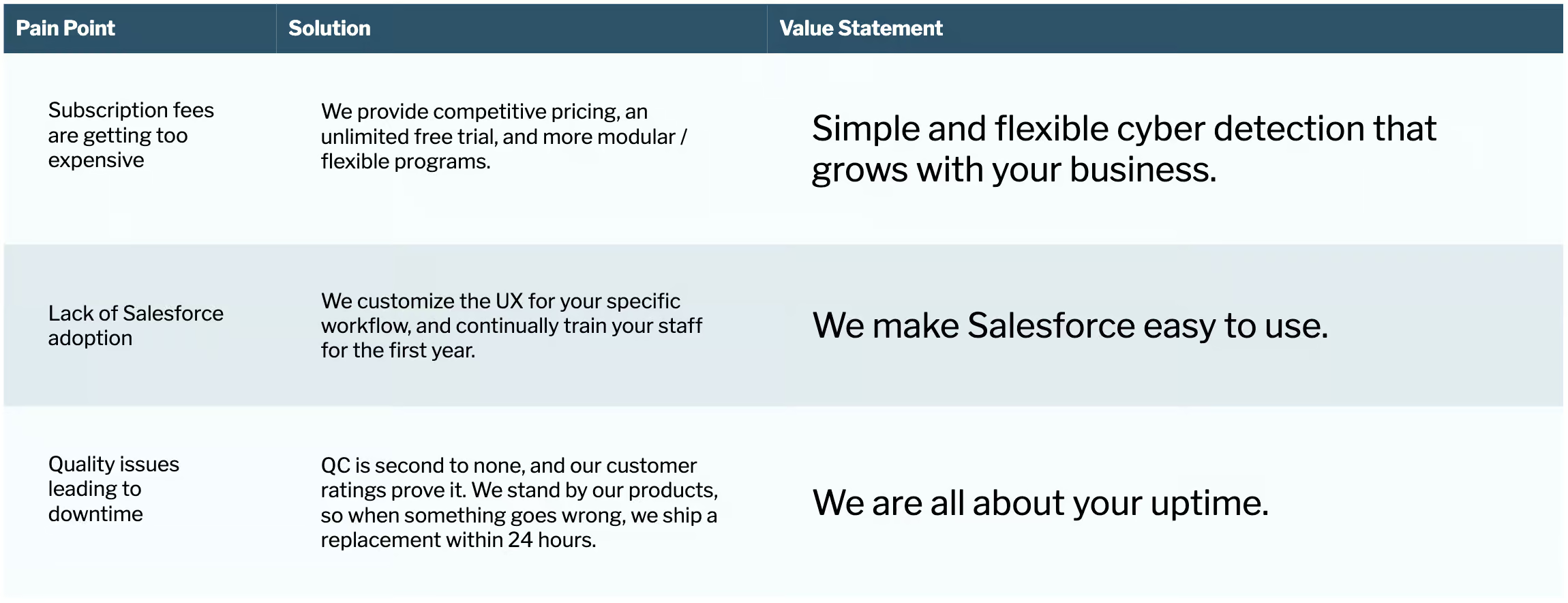
- Start with the pain points from your buyer profiles. That's the foundation.
- Build solutions around those pain points: not your products, but how you solve the problem.
- Distill those solutions into clear statements.
- Those statements become the headline of your value proposition profile. You can layer in differentiators, assign buyer personas, and map competitors' positions alongside yours. That's useful but not required to start.
- Skip value prop canvases and mapping frameworks. They add complexity without adding clarity.
A simple example of a value proposition map
4 Positioning
Positioning maps how your company compares to peers on first impression. It can also precede value proposition work, using the competitive landscape to inform what unique angle to stake out.
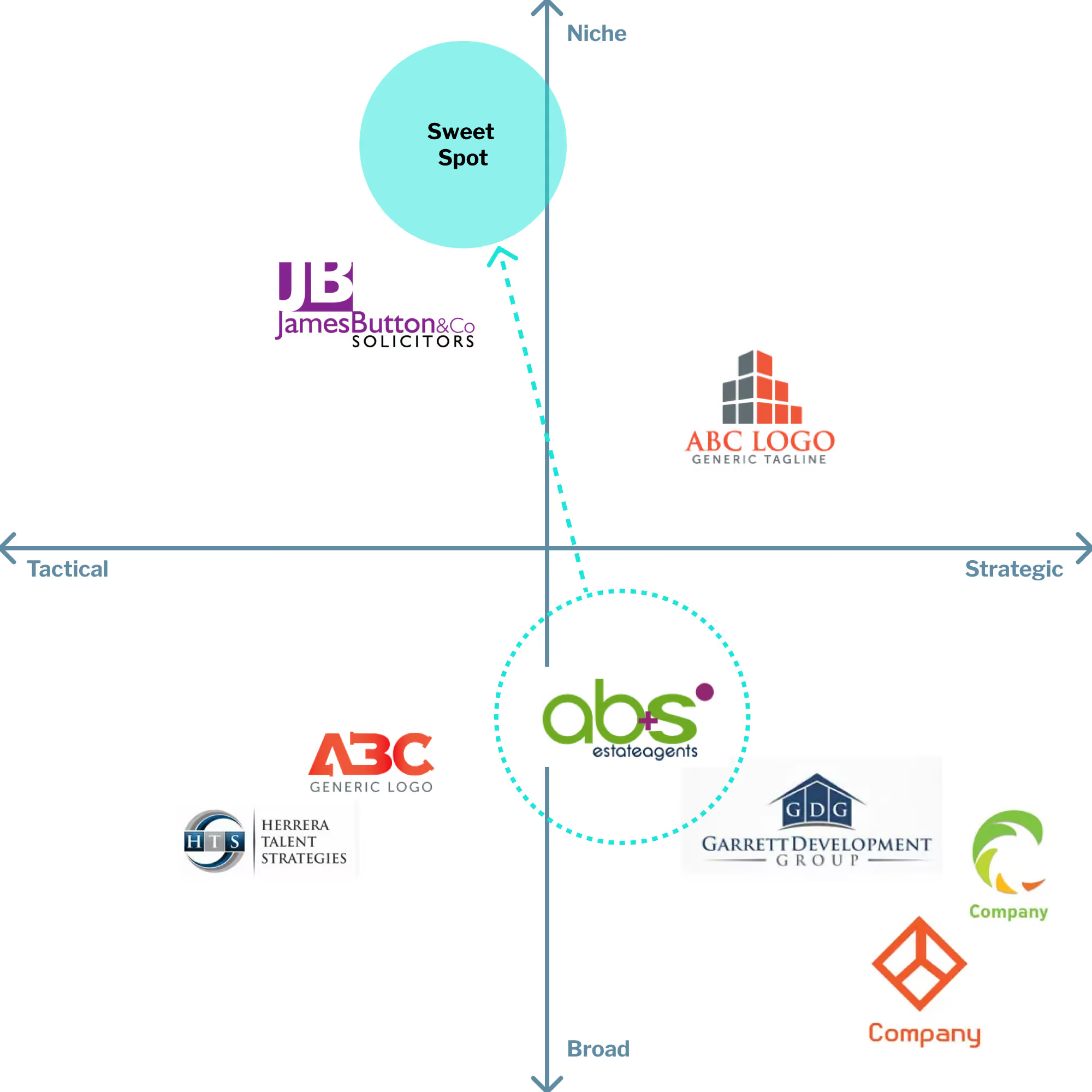
Positioning is typically done as a quadrant graph. You choose the spectrums to measure and place brands in relation to each other.
In this example, a fabricated consulting firm, ABS, can see competitive density among firms targeting broad verticals with a strategic orientation. A competitor, James Button, has carved out a more tactical and niche position. ABS identifies that as a space with less competition and moves toward it.
5 Sales Modeling
At this stage you're confirming how you're going to approach sales. Most businesses already have a model operating, often by default. The goal here is to make sure the model is deliberate, that everyone understands it, and that alternatives have at least been considered.
The four primary sales models
6 Sales & Marketing Motions
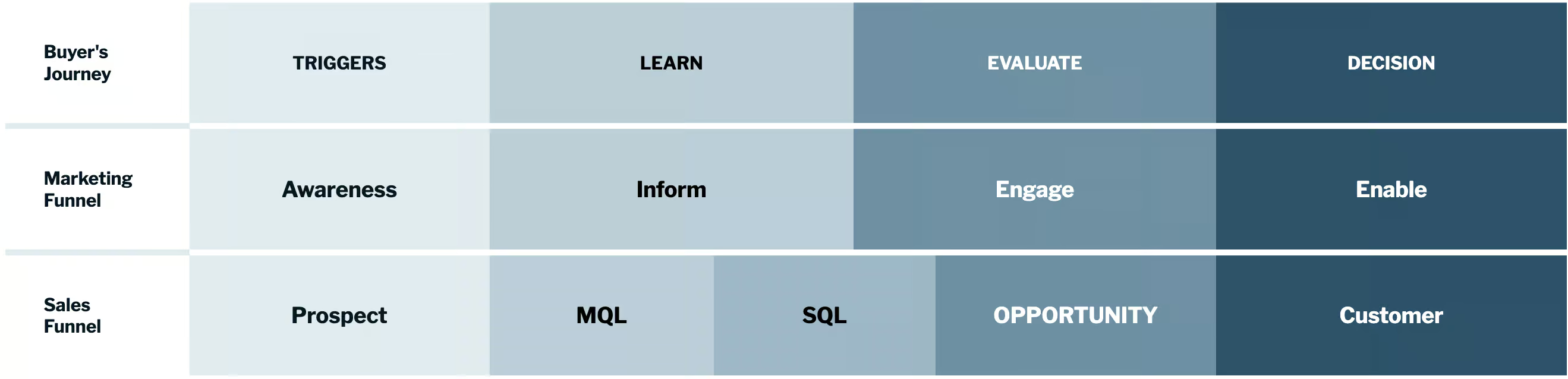
A sales and marketing motion maps the buyer's journey to a structured set of actions for both teams. It gives sales a more systematic way to move a lead toward an opportunity, and gives marketing a clear picture of what to build and when.
An example of a simple sales motion and marketing motion mapped to a basic buyer’s journey.
7 Making the GTM Stick
The goal is for the GTM to live in how the organization operates, not as a document in a shared folder that nobody opens after the launch meeting.
- Survey key stakeholders or the full team. Make sure sales has meaningful input into what gets asked.
- Interview clients with sales staff present. Keep it conversational and focused on understanding why clients care and what draws their attention. Avoid turning it into a customer satisfaction review.
- Train leadership, especially the CEO, on the strategic value of marketing and brand. Executives manage many priorities; brand rarely rises to the top on its own. But when asked to describe the ideal client or the ideal market, they engage. Start there.